


Key Points
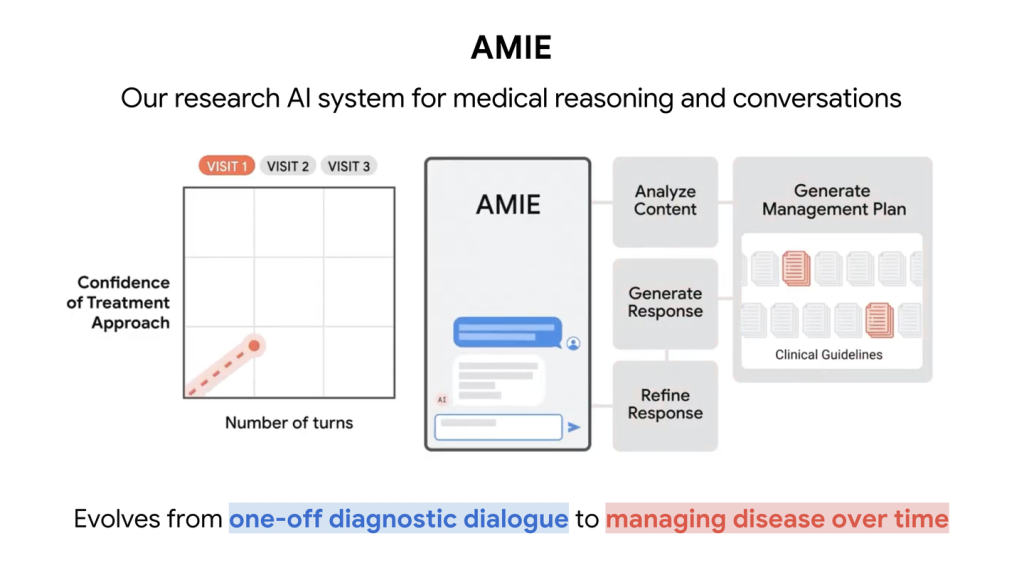
- AI can move from a single diagnosis to ongoing disease management.
- AMIE matched doctors in reasoning and beat them on plan precision and guideline use.
- A nationwide study will test AI in real‑world virtual care settings.
Getting a diagnosis is only the first step. Once a condition is found, patients need ongoing care that tracks symptoms, follows new guidelines, and adjusts medication over time. Recent work shows that AI can help make this shift from a single diagnosis to diagnosis to management.
The study published in Nature tested an AI system called AMIE, which uses the long-context reasoning ability of modern language models. AMIE combines an empathetic conversation bot with a deep‑thinking analysis engine that can scan hundreds of clinical pages at once. This design lets the system keep up with changing treatment advice.
In a blind test, patient actors talked with AMIE while specialist physicians compared its advice to that of 21 primary‑care doctors. AMIE performed as well as the doctors in overall management reasoning and scored higher on how exact its treatment plans were and how closely they followed official guidelines.
Google plans to run a nationwide study that places the AI into real-world virtual care settings, letting patients get continuous support without visiting a clinic. If successful, the technology could free doctors to spend more time with patients and improve care continuity.
You can also check out our list of the Best Instagram Extensions, Best Pinterest Exensions & the Best AI Extensions.