Readers like you help support this site. When you make a purchase using links on our site, we may earn an affiliate commission. All opinions remain our own.
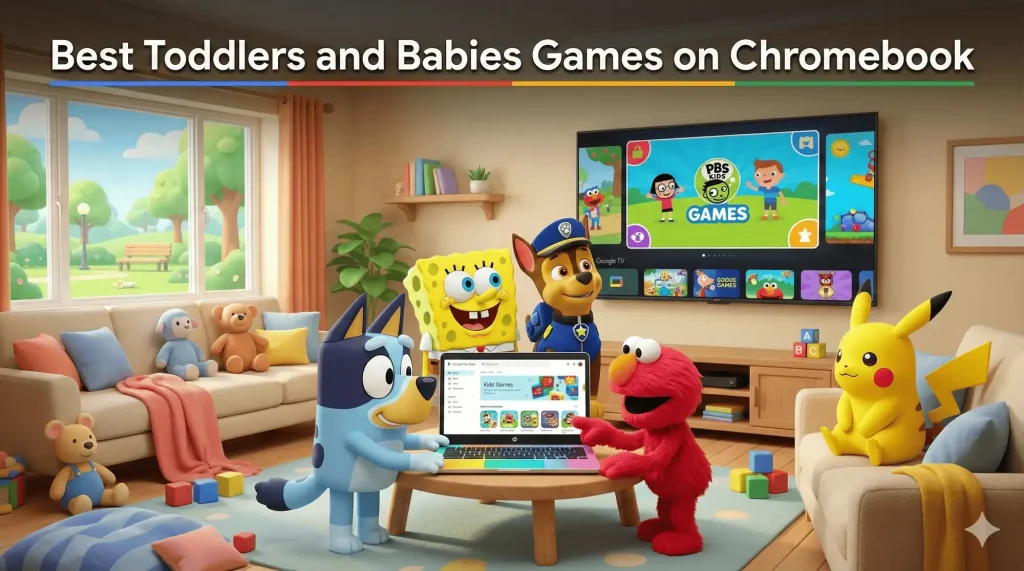
The best games for babies and toddlers on Chromebook in 2026 are Khan Academy Kids (for ad-free learning), Sago Mini World (for open-ended play), and Lego Duplo World (for creative building). These three lead the pack because they are safe, ad-free, and optimized for touchscreens.
As a new mom, I quickly discovered that keeping a little one entertained wasn’t always easy. Between diaper changes and endless “cooing” sessions, I found myself searching for ways to not only engage my baby but also create special moments of connection.
As I was working on my trusty ol’ Chromebook, I think I was editing a spreadsheet or something and suddenly something hit me: Why can’t I find some games that my baby and I can play together?
Below, I share our top picks for 2026. I personally tried each game with my daughter (who was 2 at the time), and she definitely had her favorites.
Have a favorite we missed? Contact us or leave a comment below.
🛡️ Parent Pro-Tip: “Baby-Proof” Your Chromebook
Terrified your toddler will accidentally delete your work? Enable “App Pinning.”
Go to Settings > Apps > Google Play Store > Manage Android Preferences > Security > Advanced > App Pinning.
Turn it ON. Now, when you open a game, you can “pin” it so your child cannot exit the app without pressing a specific key combination.
If you only download three apps, make them these. They are the ones I couldn’t survive parenting without.
1. Sago Mini World
Editor’s Choice
If you want an app that feels like a digital playground rather than a video game, this is it. There are no high scores, no time limits, and no “losing.” Your child just explores diverse worlds with cute animal friends.
❤️ Why Parents Love It
Perfect for car rides (offline play). It encourages storytelling, I often ask my daughter, “Where is the dog going?” and she builds a story around it.
The gold standard for free education. It offers a massive library of books, songs, and logic games. It adapts to your child’s age (2-8), so it grows with them.
❤️ Why Parents Love It
Guilt-free screen time. It feels like a digital preschool. I love the “Library” mode where I can choose a specific book to read together.
These apps encourage your child to speak, read, and create art.
7. Endless Alphabet
A massive favorite on Reddit parenting forums. Cute little monsters knock over a word, and your child has to drag the letters back into place. As they touch a letter, it makes the phonetic sound (“b-b-b-b”), teaching them how to read, not just memorization.
❤️ Why Parents Love It
The animations are hilarious. It teaches advanced words like “Gargantuan” and “Cooperate” in a way that actually sticks.
This is a safe space to draw, color, and raise virtual pets. It’s “mess-free” art where kids can experiment with glow-in-the-dark markers, glitter, and stamps without ruining your carpet.
❤️ Why Parents Love It
It is creativity without the cleanup. Plus, there are no ads to accidentally click on.
🧠 Educational Benefit
Fine Motor: Precise drawing.
Responsibility: Caring for digital pets.
📸 Parent Tip: Did you take a cute photo of your kid playing? Check out our guide on the Best Photo Editors for Chromebook to turn that memory into a masterpiece.
Imagine a virtual playdate. Babsy is an interactive baby who repeats what your child says in a funny voice. It sounds simple, but for toddlers just learning to speak, it is hilarious and motivating.
❤️ Why Parents Love It
It gets even shy kids laughing and using their voice loud and clear.
🧠 Educational Benefit
Verbal Skills: Encourages speech.
Empathy: Babsy reacts to touch (giggles or cries).
Featuring favorites like Daniel Tiger and Elmo. These games are backed by university research and are designed to teach social-emotional skills alongside math.
❤️ Why Parents Love It
It uses characters they already love and trust, making the lessons stick.
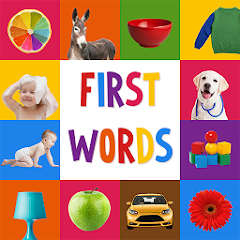
Simple digital flashcards. Tap a “Cat,” hear “Cat.” It is basic, but it is one of the most effective ways to introduce new vocabulary to the youngest toddlers (ages 1-2).
❤️ Why Parents Love It
It’s easy to use one-handed while holding a baby. Zero setup required.
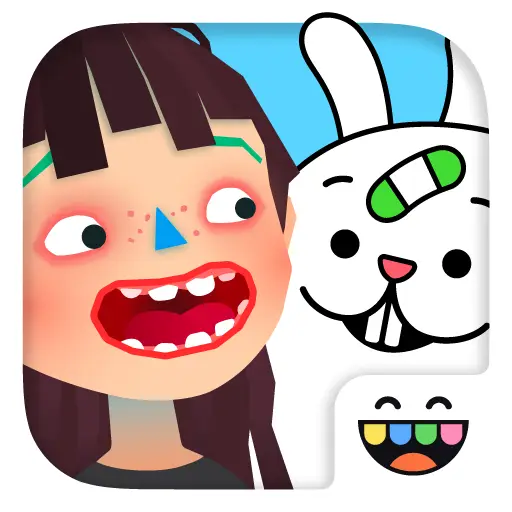
A classic role-playing game. Your child cooks “gross” or delicious food (blend a shoe with a carrot!) and feeds it to guests to watch their funny reactions.
❤️ Why Parents Love It
It’s messy fun without the messy kitchen. The characters’ faces make everyone laugh.
You might be wondering: “Does AI have a place in my toddler’s life?” While we don’t recommend giving a baby access to a chatbot, you can use tools like Gemini or ChatGPT to be a “Super Parent.”
🌙 Instant Bedtime Stories
Ask AI: “Write a 2-minute bedtime story about a brave toddler named [Your Child’s Name] who befriends a dinosaur who loves broccoli.” It creates a personalized book in seconds.
🤔 The “Why?” Phase
When your child asks “Why is the sky blue?” for the 50th time, ask AI to “Explain it to a 3-year-old.” You’ll get perfect, simple analogies.
🛡️ Keep Your Child Safe Online
Worried about what else they might click on? Use Google Family Link to set screen time limits and approve app downloads remotely.
Playing games with your baby supports critical development areas like planning and emotional regulation. Educational toys teach object permanence and cause-and-effect. Experts agree these activities build a strong foundation for learning and development.
Can screen time cause autism?
No. Research from Drexel University indicates that excessive screen time in children with ASD is likely a symptom rather than a cause. Genetics account for about 80% of ASD risk, making screen time an unlikely direct cause.
The first lady of ChromeGeek.com - I am a Chromebook enthusiast and I'm in charge of writing ChromeOS tutorials and finding the best Chrome-related content to share with you all. I enjoy reading, hitting the gym on Sundays before church, and absolutely love playing games on my Android phone and Chromebook. Currently living in Houston, Texas, I'm studying marketing with plans to pursue a law degree in the future.

 by
Gloria Brown
Post Updated: September 7, 2026
by
Gloria Brown
Post Updated: September 7, 2026