
Google Opens Deep Review to Everyone With 2 Free Reviews a Week
 by
Sophie Sullivan
October 16, 2026
by
Sophie Sullivan
October 16, 2026
Google has opened up Deep Review, its AI tool that reads long technical documents and points out logic gaps, math mistakes and weak claims. In its Google Research announcement on October 14, Google says the tool is now available worldwide, with two free reviews a week for every user.
What Deep Review does
A second pair of eyes: Deep Review checks a document for logical consistency and mathematical statements, suggests improvements, grounds facts, and compares the work with existing research. Google says it leaves the higher-level judgment calls to humans.
Not just for papers: it started with computer science research papers, but Google says it can now help with design documents, presentations, and legal or financial documents. For example, it can spot unstated assumptions in a design doc, or check that slide takeaways match the charts.
Powered by Gemini 4 Argon: Google says Gemini 4 Argon support is rolling out to Deep Review and improves the quality of its feedback. FrameSignal reports that the free reviews run on Gemini 4 Argon at a medium effort setting, and that you sign in with a Google account.
Free reviews, limits and formats
Privacy: Google says documents you upload are never used to train, fine-tune or improve its models. They are stored for one year only so they can be shown to you in the Deep Review interface.
Why Google built it
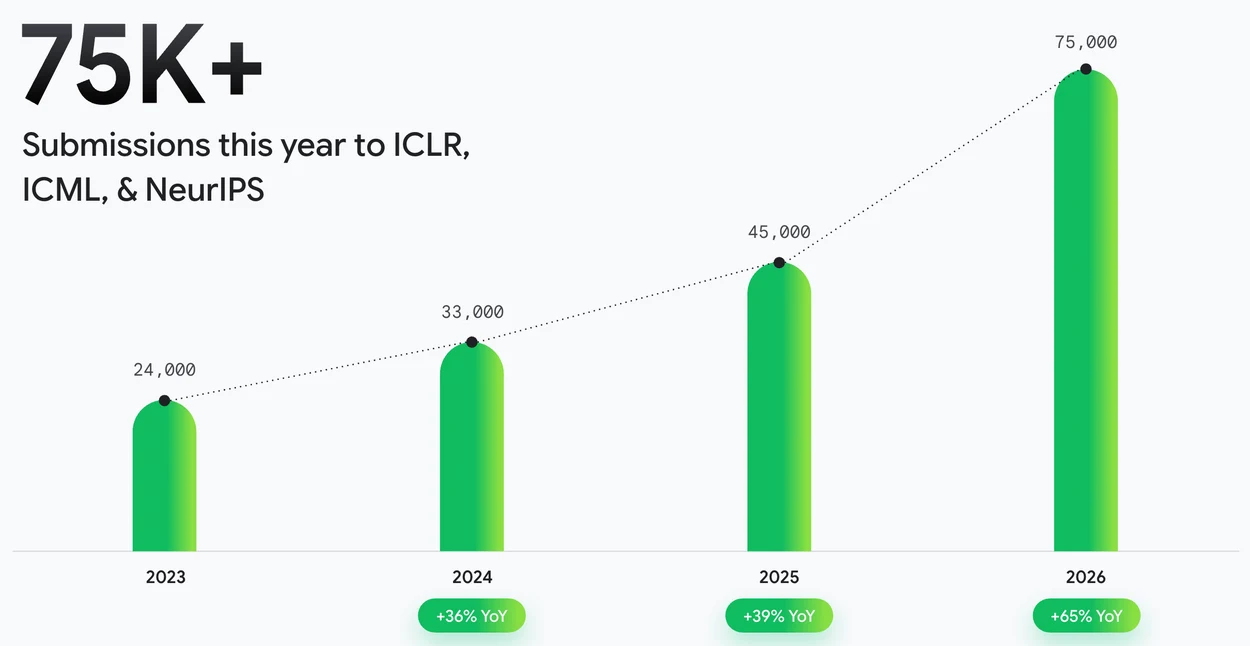
Too many papers, too few reviewers: Google says three big AI conferences (ICLR, NeurIPS and ICML) got over 74,000 submissions this year, up from about 45,000 in 2025 and 23,000 in 2023. Human reviewers cannot keep up with that pace.
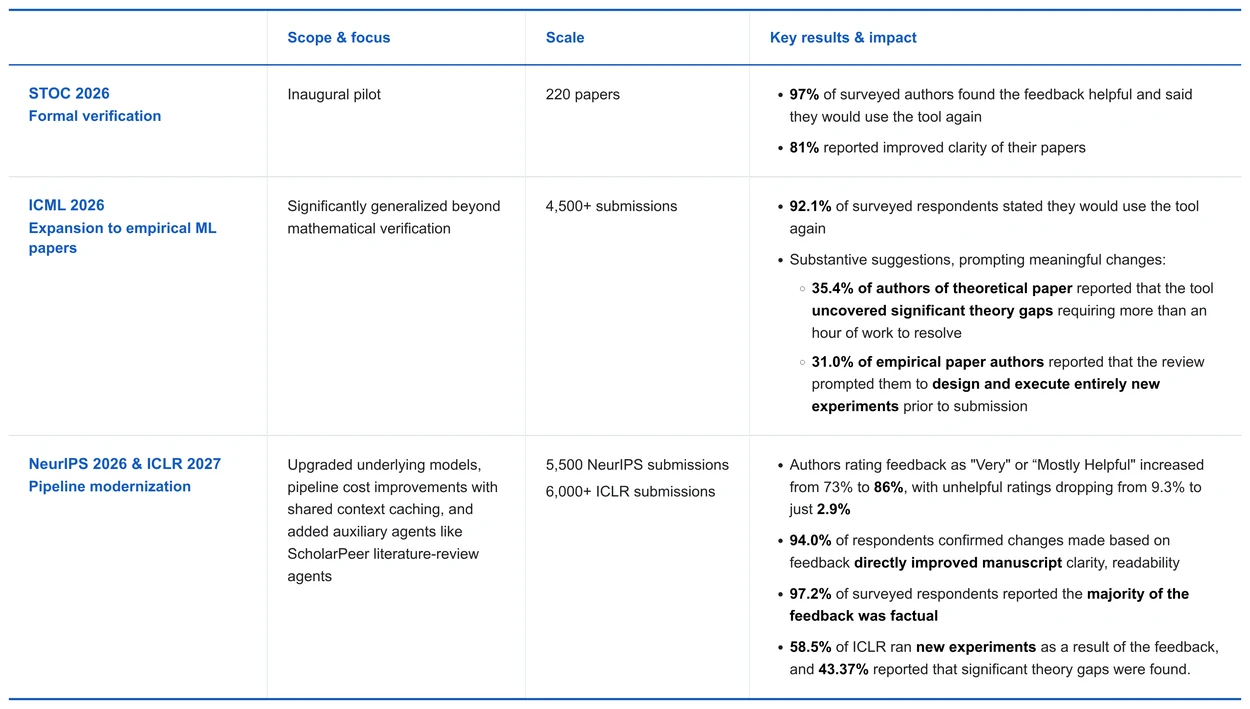
Tested at real conferences: before launch, Deep Review ran as the Paper Assistant Tool at STOC 2026, ICML 2026, NeurIPS 2026 and ICLR 2027. More than 16,000 manuscripts got private, opt-in feedback before submission. The feedback was separate from the official review process.
Not perfect: FrameSignal notes that in the conference trials, some authors said the tool sometimes flagged correct proofs as wrong. So treat its feedback as a helpful check, not the final word.
How it works
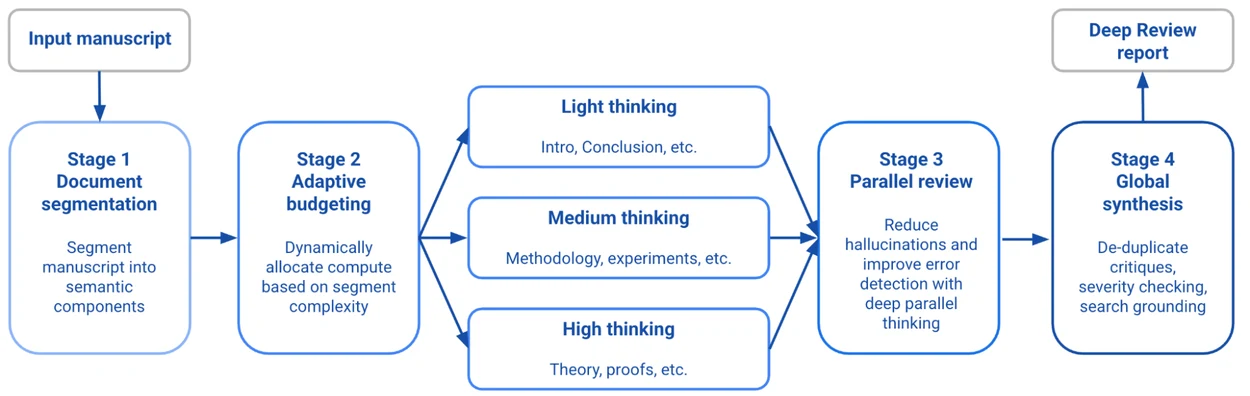
Four steps: Deep Review splits your document into sections, gives more computing power to dense parts like math proofs, checks every section in parallel with specialized agents, and then combines the results with a final consistency and fact check.
For Antigravity users: Google also added a document review pattern inspired by Deep Review to Antigravity, which you can start with the /teamwork-preview command.
Our take: two free reviews a week is enough for students, researchers and anyone writing a spec or proposal to try it on real work. It runs on the web, so a Chromebook or any computer with Chrome is all you need.
New to the model behind it? Read our Gemini Argon guide.
Discover more from Chrome Geek
Subscribe to get the latest posts sent to your email.