How to Install and Use Opera on Chromebook and Googlebook
 by
Juniya Sankara
Post Updated: November 2, 2026
You can install and use Opera on Chromebook and Googlebook through the official Android apps from Google Play, direct Linux Debian packages, or wireless phone casting. It delivers an exceptional alternative to Google Chrome by combining an unlimited free built-in VPN, native ad blocking, integrated Aria AI assistance, battery-saving optimizations, and Opera Mini’s extreme data compression.
Googlebook and Chromebook devices provide versatile application environments, allowing you to run lightweight mobile APKs alongside desktop-grade Linux software. This in-depth setup guide covers Google Play deployment, native 64-bit Linux terminal installation, Googlebook phone casting via Cast My Apps, privacy shield management, Flow cross-device sharing, and tested fixes for common ChromeOS browsing glitches.
Need assistance choosing between Opera versions or configuring your VPN connection? Contact us with your device specifications and ChromeOS version.

Get Opera on Google Play →Get Opera Mini →Download Opera Linux (.deb) →
How to install Opera on Chromebook and Googlebook
Installing the official Opera Android app from Google Play delivers touch-friendly browsing, instant updates, and native ChromeOS notification support:
For complete setup instructions, check out our official Android app setup guide for Chromebook and our companion guide on installing apps on Googlebook. Note that school or enterprise managed devices may require administrator permission to install external Google Play utilities or enable Android subsystems. If you require full desktop extension support or prefer a desktop-class interface, you can also install the official 64-bit Debian Linux package as detailed below.
How to install desktop Opera via the ChromeOS Linux environment
For power users who need full desktop Chrome Web Store extension support, customizable sidebar messengers, and advanced developer inspect tools, installing desktop Opera through the ChromeOS Linux container (Crostini) is the ideal choice:
opera-stable_*.deb package in your Downloads folder, and drag it into the Linux files directory in the left sidebar.sudo apt update && sudo apt install -y ./opera-stable_*.debopera in the Terminal or clicking the Opera icon inside the Linux apps folder in your app launcher.Cast Opera from your phone on Googlebook
Googlebook users can also access Opera effortlessly through native phone hub integration. Using Cast My Apps from the Googlebook phone hub, you can wirelessly stream your phone screen and active Opera sessions directly onto your desktop workspace without transferring files, configuring cables, or running duplicate local instances.
Built-in free VPN and encrypted privacy protections
Unlike standard web browsers that require third-party subscription extensions for anonymity, Opera provides a native, zero-configuration virtual private network directly inside the browser settings:
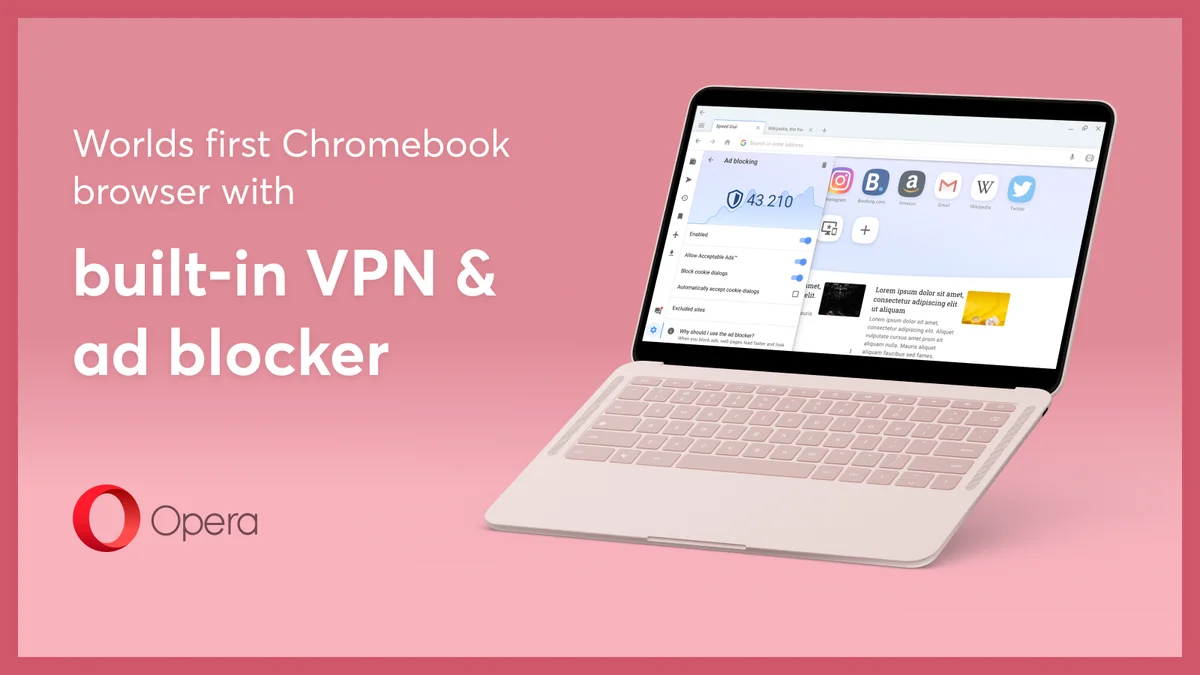
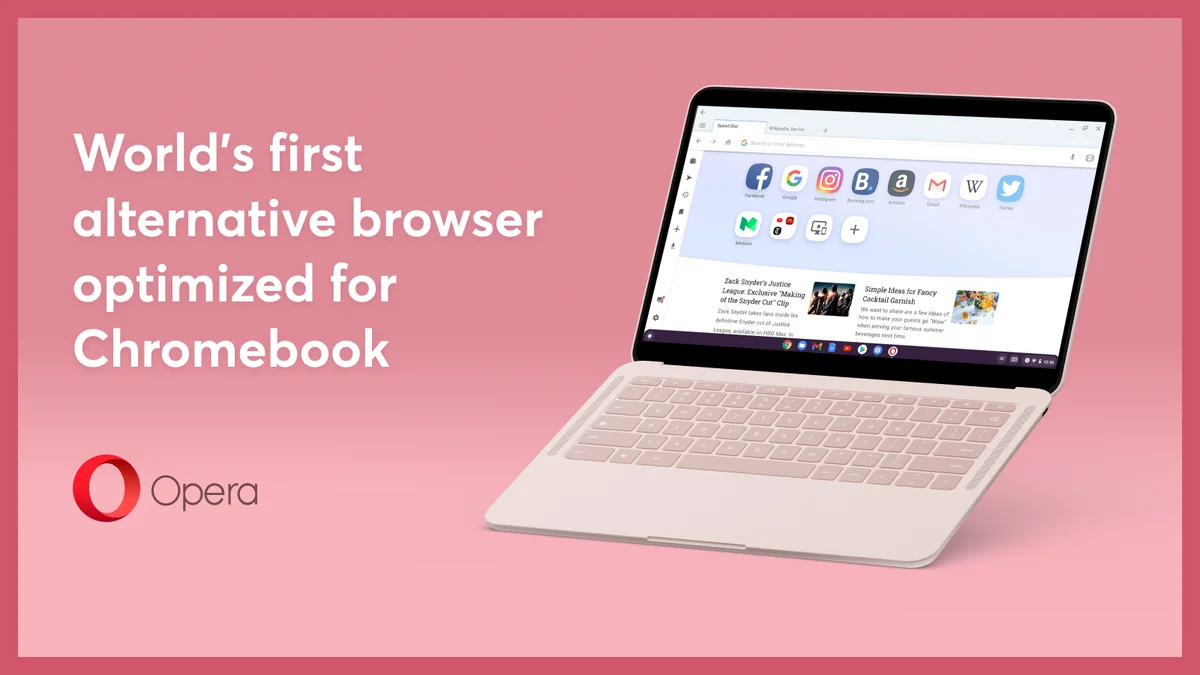
Native ad blocking and tablet Speed Dial dashboard
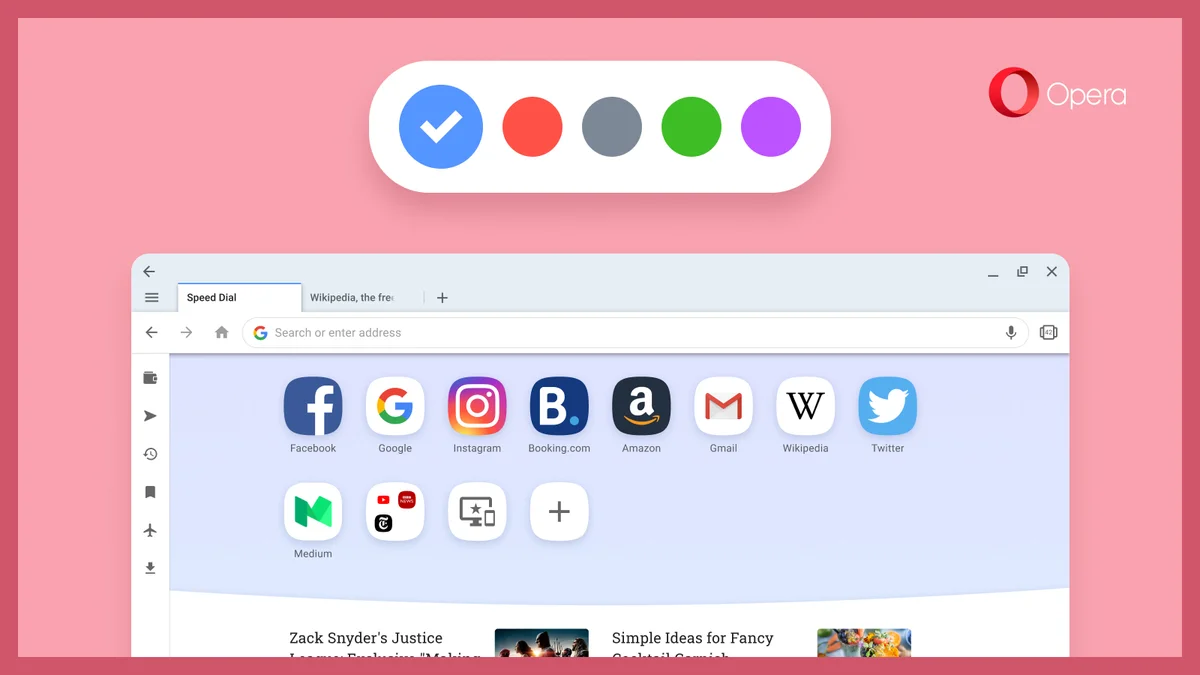
Online advertisements, autoplay videos, and intrusive tracking scripts consume system memory and drain laptop battery life. Opera incorporates an engine-level ad blocker that cleans web pages before they render, combined with a responsive Speed Dial dashboard formatted for landscape screens:
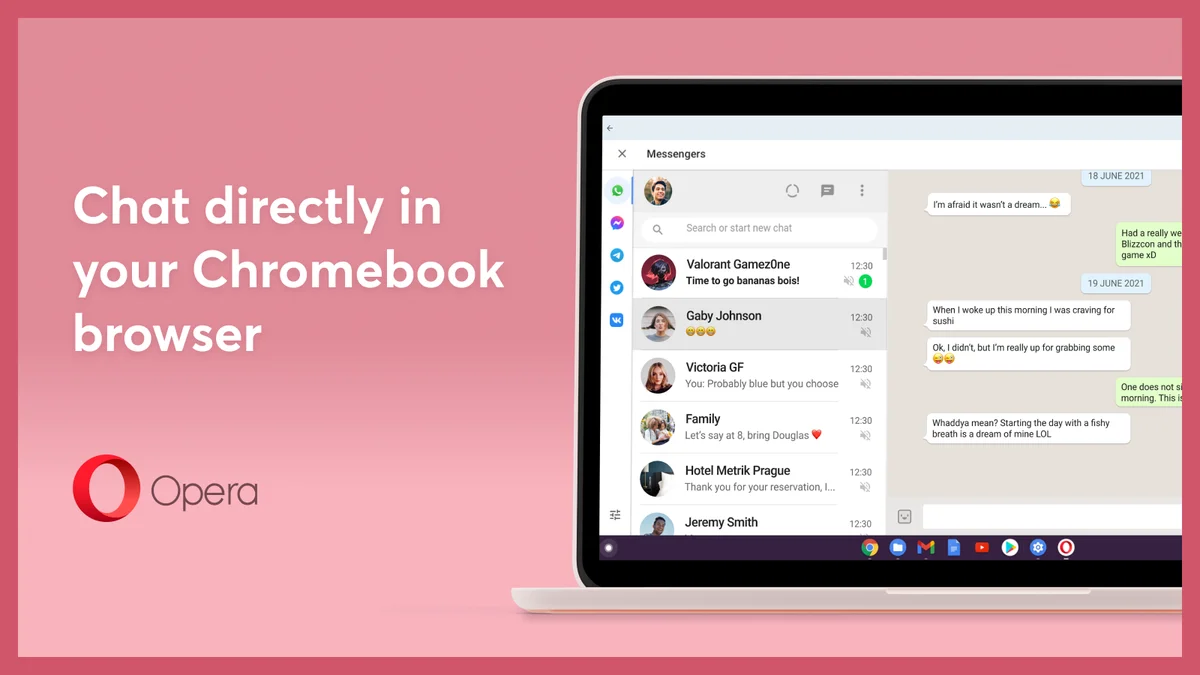
Integrated sidebar messengers and cross-device Flow sync
Opera features integrated sidebar messengers directly within the browser window alongside Flow for effortless cross-device file and link synchronization between Chromebooks and smartphones:
Opera Mini: extreme data compression for metered connections
For users operating on limited mobile hotspot allowances or slow travel Wi-Fi connections, Opera Mini provides industry-leading compression technology that dramatically slashes data usage:
Opera Android vs. Opera Linux (.deb) vs. Opera Mini comparison
Depending on your hardware specs and browsing priorities, each Opera variant offers distinct advantages on Chromebook and Googlebook:
Troubleshooting common Opera issues on ChromeOS
If you run into connection drops, slow page loading, or app crashes, these targeted troubleshooting steps resolve the most frequent issues:
Frequently asked questions about Opera on Chromebook
Is Opera’s built-in VPN completely free to use on Chromebook and Googlebook?
Yes. Opera includes a completely free, unlimited built-in VPN with no mandatory subscriptions, data bandwidth caps, or sign-ups required. It encrypts your browser traffic and offers virtual locations across America, Europe, and Asia. Users seeking device-wide system VPN encryption and dedicated high-speed server choices can optionally upgrade to Opera VPN Pro.
What is the difference between standard Opera and Opera Mini on ChromeOS?
Standard Opera is a full-featured Chromium browser offering a built-in VPN, native ad blocker, Aria AI assistant, Flow sync, and rich media support. Opera Mini is an ultralight mobile browser focused on extreme data savings, compressing web pages by up to 90 percent on Opera servers before delivery to deliver rapid speeds on weak or metered internet connections.
Can I install Chrome extensions and add-ons in Opera on Chromebook?
If you install Opera via the native Linux development environment (Debian package), you can install extensions directly from the Chrome Web Store and Opera Add-ons catalog. The Google Play Android versions of Opera and Opera Mini do not support desktop Chrome extensions but provide robust built-in features like native ad blocking, cookie dialog rejection, and VPN protection.
How do I fix Opera if web pages fail to load or the app freezes after a ChromeOS update?
If Opera experiences performance issues or crashes, clear the Android app cache by going to ChromeOS Settings > Apps > Manage your apps > Opera > Storage and selecting Clear Cache. If you are using Linux Opera, open the Terminal and run ‘sudo apt update && sudo apt upgrade’ to ensure all container graphic libraries and dependencies remain current.
How do I connect Opera Flow to share tabs, notes, and files between my phone and Chromebook?
Open Opera on your Chromebook and click the Flow icon (paper dart symbol) in the sidebar or menu. Open Opera on your mobile phone, navigate to Flow in Settings, and tap ‘Connect a device’. Scan the QR code displayed on your Chromebook screen with your phone camera. Your devices connect securely via end-to-end encryption without requiring login credentials.
Explore more browser and productivity guides for Chromebook
Looking to expand your ChromeOS browsing toolkit? Compare performance with our setup guide for Firefox on Chromebook, explore AI-assisted tab navigation in Microsoft Edge on Chromebook and Googlebook, or enhance your default browser with our collection of the best Chrome extensions. For multimedia playback on your laptop, configure high-performance video streaming with VLC on Chromebook.
Discover more from Chrome Geek
Subscribe to get the latest posts sent to your email.