Googlebook Leaks Point to Cheaper Snapdragon C and 8GB Models
 by
Sophie Sullivan
Post Updated: November 23, 2026
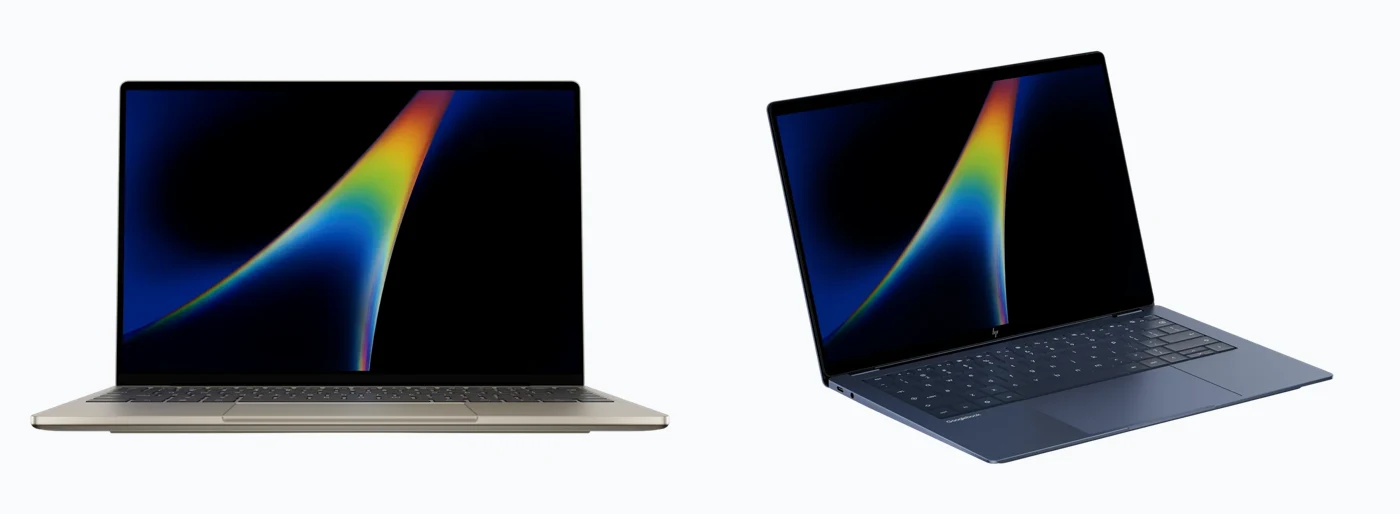
Cheaper Googlebooks look to be on the way. A run of finds from GbookHub, which digs through Google’s public Chromium code reviews, points to an entry-level Googlebook family built on Qualcomm’s budget Snapdragon C chip, Intel test units with 8GB of RAM, a new Lenovo board and an ASUS detachable. None of this is confirmed by Google, so treat it as an early look, not a spec sheet.
1. Bandit could be the first budget Googlebook
The clue: a code change titled “kenai: Add GOOG0c00 for bandit” adds settings for Bandit to the firmware of the chip that handles USB-C charging. Bandit is the first board in a new Googlebook series called Dougie, and Dougie is also the name of the Qualcomm chip it uses.
Why Kenai matters: Googlebook’s bootloader shares code across five Qualcomm chips: Hamoa (Snapdragon X Elite), Purwa (Snapdragon X Plus), Mahua (Snapdragon X2), Canim (still unknown) and Kenai, which is said to be Snapdragon C. Since Bandit shows up under Kenai, Dougie and Kenai are likely the same chip.
What Snapdragon C is: Qualcomm announced Snapdragon C in May 2026 for entry-level laptops starting at $300. It has a 12 TOPS NPU for on-device AI, but it does not meet Microsoft’s Copilot+ bar. An NPU is one of the things a Googlebook needs, so it fits.
Three price tiers: if this holds, Qualcomm Googlebooks would come in three levels: Snapdragon X Elite and X2 Elite at the top, X Plus and X2 Plus in the middle, and Snapdragon C at the entry level.
2. Intel’s Ocelot shows up on Geekbench with 8GB
The listings: there are 32 Geekbench 7 results for “Google Ocelot”, uploaded in October and November. Each one shows a 6-core Intel chip listed as “Core 7 305” at 1.5GHz, Android 16 and 8GB of RAM. Ocelot is the reference board for Googlebooks built on Intel Core Series 3 (Wildcat Lake).
Do not read the scores yet: single-core results land around 428 to 459 and multi-core around 1,573 to 1,951, far below the roughly 2,000 and 7,000 that Windows laptops with these chips score. That gap, plus a chip name Intel does not actually sell, points to an early test unit, not a finished laptop.
The RAM is the real story: the first Googlebooks shipped with 16GB as standard. 8GB on a reference board hints that cheaper Intel Googlebooks could start with less memory.
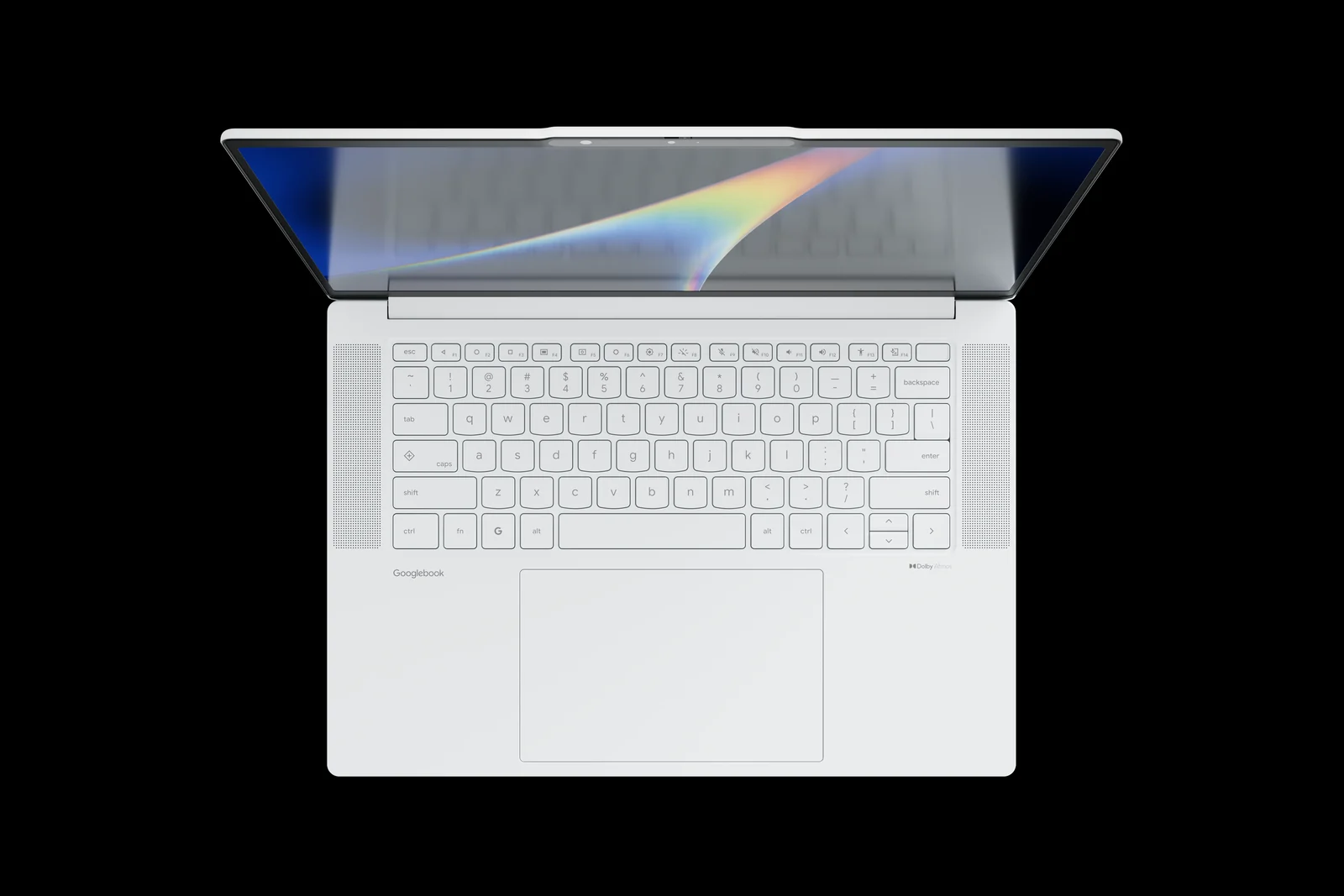
3. Bianco looks like a second Lenovo Intel model
What the code shows: Bianco was copied from Ocelot in September. Its setup lists two USB-C ports (one on each side), one USB-A port and HDMI, optional touch, onboard LPDDR5x memory, an NVMe SSD, and an optional fingerprint reader and keyboard backlight. These may be the maximum options rather than the final specs.
Why Lenovo: there is no orientation sensor, so it is most likely a clamshell, not a 2-in-1. The developer who created it uses an email at LCFC, the company that builds Lenovo laptops. That makes Bianco the eleventh board in the Ocelot family, next to the Dell board we covered in our Libra leak.
4. Meru, the Snapdragon detachable, may be ASUS
The logo clue: Meru’s boot screen code points to the same OEM logo folder as the ASUS Googlebook 14 (codenamed Lapis). Each maker has its own folder, so this is a stronger hint than the earlier signs that pointed to Lenovo or HP.
What to expect: earlier code showed Meru as a detachable with a stylus that charges wirelessly. Boards from the same period are expected to use Snapdragon X Plus, so Meru may too. If Meru is ASUS, all five first-wave makers (ASUS, Acer, Lenovo, Dell and HP) would have a Snapdragon Googlebook in the works. GbookHub thinks this batch could arrive in the first half of 2027, but there are no dates yet.
All the boards at a glance
Our take
A Googlebook that starts closer to $300 than $1,000 would be a big deal for students, schools and anyone who wants Googlebook OS without the premium price. The 8GB Intel boards point the same way. We would not plan a purchase around codenames, but the direction is clear: Google wants Googlebooks at every price, not just the top end.
Want more Googlebook background? See Intel vs Snapdragon Googlebooks for Android apps and the Lenovo Googlebook Duet 13 leak.
Discover more from Chrome Geek
Subscribe to get the latest posts sent to your email.